
Go to content Go to navigation Go to search

Welcome to the AHA Blog

May 20, 2013

Now Available at Perspectives Online: Three Books on Doing History

By Allen Mikaelian

Now open and available to all, James Herbert, former director of research programs at the National Endowment for the Humanities, reviews three books on doing history and what that means: Being a Historian by James M. Banner Jr., History Hunting by James Cortada, and History in Practice by Ludmilla Jordanova.

A common theme that Herbert points out is how “All three of these books humbly refrain from claiming high epistemological status for history … . All three, however, calmly assume the utility of history, of what Jordanova calls ‘the past’s perennial usefulness in the present.’” With this in mind, Herbert goes on to discuss the central role that public (or “applied”) history plays in each of these books, in the expanded career choices for students of history, and in the discipline as a whole.

Also in this issue and also speaking to the broad utility of history are articles by Debbie Ann Doyle, on the economic impact of the National Parks, and Marian J. Barber, reporting on the recent Congressional Briefing on immigration policy by three noted historians. Even if history has no claim to “high epistemological status,” it has concrete, ground-level influence—in everything from national policy formulation to how we spend our leisure time.


Bookmark and Share

Comment

May 20, 2013

Why Teach?

By Kenneth Pomeranz & James Grossman

At a time when many people are wondering, “What jobs does a history degree prepare a student for?” almost everyone would agree that one such job is K–12 teaching. So this article from a Columbia history major who feels that she and her peers are being steered away from teaching should concern us as historians—even if it didn’t also concern us as citizens. Our communities ought to consider why teachers are paid less than financial advisors; surely our children are as important as our money. But the professors who teach history majors also ought to consider our complicity in the inadequate status afforded to precollegiate teachers in American culture.

Bookmark and Share

Comment

May 19, 2013

History Problems…

By Vanessa Varin

As finals approach and our anxiety levels reach an all-time high, it may be worth having a space for historians and history lovers to grouse and commiserate. I asked a few of my colleagues over social media to sound off on some of the unique (and funny) history problems we face on a daily basis. These are their complaints…


Have a history problem? Tweet or Facebook us at AHAhistorians.

Photo via bookhaven.stanford.edu

Bookmark and Share

Comment [1]

May 16, 2013

Grant of the Week: Opportunities for Scholars, Institute for Advanced Study

Deadline: November 1, 2013

Scope
The Institute is an independent private institution founded in 1930 to create a community of scholars focused on intellectual inquiry, free from teaching and other university obligations. Scholars from around the world come to the Institute to pursue their own research. Candidates of any nationality may apply for a single term or a full academic year. Scholars may apply for a stipend, but those with sabbatical funding, other grants, and retirement funding or other means are also invited to apply for a non-stipendiary membership. Some short-term visitorships (for less than a full term, and without stipend) are also available on an ad-hoc basis.

For more information about the fellowship and application requirements, please visit the grant posting. For information on other grants and prizes in history, see the “Awards and Fellowships” section of the AHA Calendar.

Bookmark and Share

Comment

May 14, 2013

AHA Council Spotlight: Mary Louise Roberts

By Nike Nivar

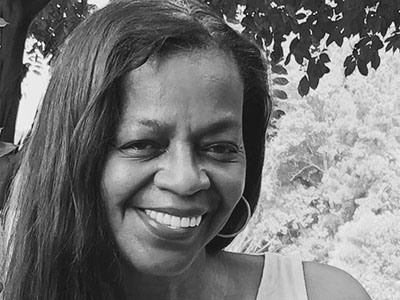
AHA Councilor, Mary Louise Roberts (Lou)

To go along with our ongoing AHA Member Spotlight we have introduced an AHA Council Spotlight series featuring short interviews with our elected council officers. Like our membership, the AHA Council is composed of historians with wide-ranging specializations, interests, and stories. We hope this feature will let our membership get to know their elected officials in a different way.

Mary Louise Roberts (Lou) is professor of history at the University of Wisconsin, Madison. She is currently a councilor in the AHA’s Professional Division and has been an AHA member since 1987.

Alma mater/s: PhD, Brown University; MA, Sarah Lawrence College; BA, Wesleyan University

Fields of interest: history of women and gender, France, Second World War

When did you first develop an interest in history?
When I was in second grade I developed an avid interest in the Norse explorer Leif Erickson. I edited a small newspaper for my street called the Riverette, and I always made sure to include at least one article about Leif Erickson.

Have your interests changed since graduate school? If so, how?
My research interests in gender and French history have remained consistent. However, I have become fascinated by the intersections of race and gender in the past. In addition, my work has become increasingly transnational.

What projects are you working on currently?
I just finished a book called What Soldiers Do: Sex and the American G.I. in World War II France, which will be published in May by the University of Chicago Press. It concerns relations—in particularly sexual relations—between American GIs and French women during the US military presence in France, 1944–46. I am also editing and translating a book of French memoirs called D-Day through French Eyes: Memoirs of Normandy 1944.

What do you value most about the history profession?
I most value the creative opportunities offered by the profession. In my career, I have been completely free to develop courses and to pursue research in areas which interest me. I also love going to archives and libraries abroad, in my case, in France.

Do you have a favorite AHA annual meeting anecdote you would like to share?
I remember the AHA in Atlanta in 1996. There was a gigantic snowstorm on the Sunday of the conference and the airport shut down. Atlanta, of all places! Graduate students could not afford the hotel, so they slept in rooms with faculty who took pity on them! It was the ultimate nightmare: the AHA meeting that never ends!

Other than history, what are you passionate about?
I am passionate about the fiber arts. I love to design, sew, and knit my clothes.

Bookmark and Share

Comment [1]

May 14, 2013

Writing Tips for Summer Break

By Jennifer Reut


Henry David Thoreau’s Cabin at Walden Pond

A few weeks ago, I ran into a senior colleague who mentioned she was off to Yaddo for seven weeks to finish her book. I was delighted to hear that she’d successfully made the case to Yaddo that historians belong at a writer’s colony, traditionally the dominion of poets, playwrights, and fiction writers. Writing history is both an intensely intellectual and profoundly creative endeavor, but this claim often draws quizzical looks from playwrights and other “traditional” creative writers.  Since so many of us turn our attention to our neglected writing projects over the summer, we thought we’d pull together some advice, encouragement, and admonishments to prime the pump.  

There is no one-size-fits-all top 10 list that would be useful to every kind of historian writing for every kind of audience. Instead, we brought together some of the more interesting ways of thinking about writing as a process or craft, from overcoming procrastination to the daily routines of successful writers to the way not to write, from the mundane rules of style to the way writing connects to thinking. We hope this gets the writers among you energized to take up that essential task of the historian, good writing, or at least provides a few productive hours of procrastination.

Writing and Thinking
Lynne Hunt’s essay, “How Writing Leads to Thinking (and Not the Other Way Around),” is a good place for all writers to start and to remember that writing doesn’t arrive fully formed any more than our ideas do.

John McPhee’s recent piece in the New Yorker on first drafts acknowledges the critical importance and the pain inherent in dreadful first draft.

Inside Higher Ed and theChronicle of Higher Education both periodically publish essays and advice on writing tailored for the academic writer. Randall Stevens’ advice on “Turning it Into a Book” could be applied to book reviews, articles, and other kinds of argument-based writing.

Rules and Regulations
The New York Times has a number of writing columns, including the excellent Draft series, but we also like this mix of technical and motivational advice collected here in “Writing Rules!”

Overcoming Obstacles
Anxiety, perfectionism, and writer’s block seem to have a disproportionate role in the writing process and almost every piece of advice on writing we looked at addresses this in some form. 

The series in Inside Higher Ed on Overcoming Academic Perfectionism should be read in total, but the post on writing, perfectionism, and procrastination is particularly useful.

“Conquering Writing Anxiety,” also in IHE, talks about obstacles for student writing, but much of the advice can apply to any writer.

A favorite way to indulge in procrastination while ostensibly “curing” it is to read about other writers’ anxieties about writing and how they deal with them.

 “13 Tips for Actually Getting Some Writing Done” has many of the familiar rules (write every day, read good writers), but they bear repeating because they work.

How Other People Write
We seem to have an insatiable appetite for insight into how other writers work. The How I Write column in the Daily Beast is devoted to profiles of writers and their working process from fiction, biography, law, and history.

Interviews with writers about their routines are particularly fascinating, perhaps because we hope that we’ll learn some secret that will unlock our own voice. Maria Popova has a written a great rumination on writers and their habits, and her blog, Brain Pickings, is a rabbit hole of thoughtfully curated posts on writing and creativity across the historical and cultural spectrum.

Lastly, as a caution lest we spend too much time looking over the shoulder of other writers, Ben Dolnick warns us to stop reading articles about how other writers work if we want to get anything done.

How Not To Write
There have been many inches (and pixels) of column space devoted to bad academic writing, so we won’t dwell on them. If you’re interested, Stephen Walt’s recent essay in Foreign Policy, “Why is Academic Writing So Bad?” and the many responses are one place to start.

A few years back, the scholarly journal Philosophy and Literature held a Bad Writing Contest that included some of the most overheated sentences in academia. The contest, which aimed to “locate the ugliest, most stylistically awful passage found in a scholarly book or article,” only ran for four years but it’s still legendary in some quarters.

Planning to do some writing this summer? Share your tips with us in the comments or on Facebook, LinkedIn, or Twitter.

Bookmark and Share

Comment

May 08, 2013

What We’re Reading: May 9, 2013

By AHA Staff

Today’s What We’re Reading features the latest on the Niall Ferguson controversy, a comparative look at dissertation lengths across disciplines, a vigilante copy editor, and more!

The Niall Ferguson Controversy
Niall Ferguson’s Comments: An Open Letter to the Harvard Community
The Harvard professor apologizes for suggesting that “[John Maynard] Keynes was perhaps indifferent to the long run because he had no children and that he had no children because he was gay. 

The Economic Homophobia of Niall Ferguson
Media Matters claims that this is “nothing new” for Ferguson.

Niall Ferguson, Ted Cruz, and the Politics of Masculinity
Garance Franek-Ruta at the Atlantic asks “What happens when our most vexing policy debates turn on the question of quien es mas macho.

Niall Ferguson’s Real Mistake
Jonah Goldberg, at the National Review, would “like some clarity about what the rules are now. Because I could swear that spelunking into the hidden caves of peoples’ personal lives to shed light—or cast aspersions—on their public personas and preferred policies is the height of scholarship and wisdom these days. ‘The personal is political’ is what my feminist professors taught me in college.”

History in the News
Sequester Impacts Tourism in Washington, DC
Budget issues affect the Mall, museums, and parks in the nation’s capital.

The Nine Cs of Historical Thinking
Tim Lacy adds four Cs and one S to Thomas Andrews and Flannery Burke’s “Five Cs of Historical Thinking,” first published in Perspectives in January 2007, and still one of the most popular articles in the Perspectives online archive.

Glowing Landscape Shows River History
Changes in the course of the Willamette River over time make for a stunning visualization.

Teaching and Learning
Length of the Average Dissertation
A terrific data visualization shows that, out of the top 50 majors, history, anthropology, and political science have the highest median page lengths. Contributed by AHA Today reader Phil Katz at the American Alliance of Museums.

Does Blanket “Don’t Go to Graduate School!” Advice Ignore Race and Reality?
Tressie McMillan Cottom for the Chronicle analyzes whether advising students against graduate school reflects a class consciousness, or takes into account the advantages grad school may hold for black students.  

You’ll Never Learn!
A look at how our dependence on our mobile phones can be severely undercutting our ability to retain information.

Colleges and Their Priorities
At the American Conservative, Alan Jacobs looks at the rapid and lavish development of campus amenities, and wonders if “a bold college president” will try to distinguish his or her college not by its buildings, but “By the quality of our teaching.”

Wikipedia, Authority and the Free Rider Problem
Confessions of a “selfish Wikipedian” at Peter Webster’s blog.

Fun and Off-beat
American English Dialects
A group of linguists are crowdsourcing data on North American English dialects, via a web-based survey. 

Tumbling with the Druids
Jeremy Deller’s giant inflatable Stonehenge at Art Basel Hong Kong is half bounce-house, half monument.

Vigilante Copy Editor
One concerned citizen’s plight to correct punctuation mistakes on the informational placards at the Pratt Institute’s sculpture garden.

Bookmark and Share

Comment [1]

May 08, 2013

AHA Member Spotlight: Joan Neuberger

By Nike Nivar


AHA Member, Joan Neuberger

AHA members are involved in all fields of history, with wide-ranging specializations, interests, and areas of employment. To recognize our talented and eclectic membership, AHA Today features a regular AHA Member Spotlight series. The members featured in this column have been randomly selected by AHA staff or nominated by fellow AHA members. If you would you like to nominate a colleague for the AHA Member Spotlight, please contact Nike Nivar.

Joan Neuberger is professor of history at the University of Texas (UT) at Austin. She has been an AHA member since 2002.

Alma mater/s: PhD, Stanford University; BA, Grinnell College Fields of interest: modern Russian history, film & photography history, visual cultures, cultural politics.

When did you first develop an interest in history?
I studied Russian literature as an undergrad, but when I went to Leningrad (now St. Petersburg) as a senior in 1975, I discovered that all my questions were historical questions: how could such a brilliant, warm, hospitable people produce the economic, political, and human rights disaster that was the Soviet Union? But it may go back further: my mother was a natural historian. She knew something about everyone in every branch of our family, for many generations back; she loved to tell their stories and we loved to hear them.

What projects are you working on currently?
I am finishing a book on the political and cultural history of Sergei Eisenstein’s masterpiece, Ivan the Terrible, a film that was commissioned by Stalin and made during World War II. I’m also involved in several online public history projects. I am the editor of Not Even Past, the UT History Department’s website for making our research available and accessible to people outside the profession. I am co-directing 15 Minute History, an online podcast series for teachers and students and anyone else, produced by our international studies faculty and graduate students. Each podcast is aligned to a required topic in the Texas and National Standards for US and World History. And we are getting ready to launch an interactive public history site for everyone to write a bit of their own history.

Have your interests changed since graduate school? If so, how?
Yes and no. In graduate school I was committed to social history but my dissertation and first book analyzed newspaper articles with a combination of historical and cultural methods; in a way that first book was as much an intellectual history as a social history. Over the course of my career, I’ve included more visual and cultural subjects and methods in my work, but historical questions remain at the center of what I do. I’m interested in understanding cultural production as a political and historical project.

Is there an article, book, movie, blog etc. that you could recommend to fellow AHA members?
In general, I think Russian history is underappreciated for the alternatives it offers to trends derived from west European historiography, especially on political violence, cultural politics, and empire. Louise McReynolds’ Murder Most Russian and David Brandenberger’s Propaganda State in Crisisare two deeply researched studies that change what we thought we knew about key moments when culture and state politics collide. I’m also really excited about work in other fields appearing online. The Appendix, a journal started by four graduate students in our department, Chris Heaney, Ben Breen, Felipe Cruz, and Brian Jones, is experimenting with inventive, new ways to write stories about the past. And the Stanford Spatial History Project and Digital History @ Harvard are posting the kinds of digital history and data visualizations that show us how we can be using computer technologies to produce new kinds of historical data. Kelly O’Neill’s Imperiia Project on the Harvard site is especially exciting and instructive.

What do you value most about the history profession?
I value our standards of evidence. Historians are supposed to make arguments based on evidence, not on speculative analogies or clever wordplay and not as a proof for some artificially devised model. I also value its inclusiveness: anything that happened in the past is fair game for historians and any methodology that produces sound arguments is acceptable.

Do you have a favorite AHA annual meeting anecdote you would like to share?
Last year I got to be on a panel on historical fiction with Geraldine Brooks, a novelist I greatly admire, and Peter Ho Davies, a wonderful novelist I hadn’t known previously. It was a great panel with a terrific discussion afterwards.

Other than history, what are you passionate about?
Long bike rides on our flat Texas country roads. Modernist artists who believed they could change the world for the better if they could just get people to see things in a new way. People who still call themselves feminists, who are re-fighting the battles we thought we won. And, most of all, my two boys. I honestly don’t know how they turned out so well, but they are two of the most delightful, smart, compassionate, funny, irreverent, and interesting young men anyone could wish for.

Any final thoughts?
I’m very grateful to have had a career as a historian at a great public university during a period when the production and sharing of knowledge were still valued. I worry that corporatization really will destroy what was great about our public university system, making it even harder than it is already to make quality higher education available to everyone.


Bookmark and Share

Comment

May 07, 2013

Four AHA members among the 2013 Newcombe Dissertation Fellows

By Jennifer Reut

Since 1981, the Charlotte W. Newcombe Doctoral Dissertation Fellowship has recognized outstanding doctoral work in the areas of religion and ethics. Administered by the Woodrow Wilson Foundation, the award, which carries a $25,000 stipend, is for full-time dissertation writing for PhD candidates at American universities in the US. This year, as in years past, we are recognizing the award recipients, including four AHA Members: Samuel Anderson (UCLA), Hannah Barker (Columbia Univ.), Zain Lakhani (Univ. of Pennsylvania) and Caroline Spence (Harvard Univ.). Congratulations to recipients, and good luck in the final year of writing your dissertation.

The 2013 Charlotte W. Newcombe Doctoral Dissertation Fellows*


Dissertation titles are subject to change. The titles reflected here were correct at the time the awards were made.

Bookmark and Share

Comment

May 07, 2013

Opening the Journal and the AHA’s Online Journey: Two Trending Perspectives Articles Now Open

By Allen Mikaelian

Two articles published in the May issue of Perspectives on History have become part of conversations online, and we wanted them to be available to a wider audience. They are now open to members and non-members alike.*

In “Opening the Journal,” Hong-Ming Liang offers insights into what a journal can do to serve the college, community, and liberal arts. As chief editor of the Middle Ground Journal, Liang cultivates a commitment to history in his student interns, who take on teaching and mentoring roles at a local public charter school. And since this open-access journal supports and relies on a worldwide network of scholars, the journal serves as a global-local link, while serving both teaching and scholarship.

The Middle Ground Journal is open access, and Liang offers his views on OA on thejournal’s blog: “In other words, while the open-access movement is important, The Middle Ground is not ‘free’…” His blog post and his article are both worth reading in full.

Also in the May issue is the last of several hundred articles written by Robert Townsend for Perspectives as a staff member. Townsend, former deputy director of the AHA, takes a look back at “The AHA’s Online Journey,” and offers a few lessons learned. One section has already been picked up by readers and discussed on social media, namely, Townsend’s discussion of the AHA’s experiments with open access. Townsend notes that the AHA’s American Historical Review started losing institutional subscriptions with its appearance on JSTOR, but “the decline during the year of open access was notable as the largest annual drop in the time we’d kept records….”

In September 2012, the AHA Council issued a statement on the “author pays” model of open access, and suggested that “historians begin thoughtful conversations” about the issues raised. We hope these articles, one by an editor of an open-access journal and one by a 24-year veteran of digital publishing, will help continue the discussion. Please visit the AHA’s Storify page on this issue, and watch for an upcoming panel on the topic at the 2014 annual meeting.

* Many feature articles in Perspectives Online are available only to members for the first thirty days, at which point they become freely available to all.

Bookmark and Share

Comment

May 02, 2013

Grant of the Week: Fulbright Israel Post-Doctoral Fellowships for American Researchers in History

Deadline: August 1, 2013

Scope
The United States-Israel Educational Foundation (USIEF), the Fulbright commission for Israel, offers 8 fellowships to American post-doctoral researchers in support of work to be carried out at Israeli universities. This program is open to American post-doctoral researchers in all academic disciplines.

USIEF awards are granted on the basis of academic excellence, the leadership promise of the applicant, and the potential of the proposed visit to both advance knowledge and enhance mutual understanding between the peoples of the U.S. and Israel.

The Fulbright award ranges from 20,000- 40,000 dollars per academic year.  Fulbright funding supplements basic post-doctoral stipends provided by Israeli host institutions.

For more information about the fellowship and application requirements, please visit their website. For information on other grants and prizes in history, see the “Awards and Fellowships” section of the AHA Calendar.

Bookmark and Share

Comment

May 01, 2013

What We’re Reading: May 2, 2013

By AHA Staff

Today’s What We’re Reading features another update on sequestration closings, defending historian as a real job, the new American dream, and more!

History in the News
Debate Rages over State History Textbooks
The Moscow Times: “As part of his effort to promote patriotism among younger generations of Russians, President Vladimir Putin has proposed creating a single set of history textbooks for schoolchildren, arguing that there should be more consistency in what students are taught and that textbooks should be free of internal contradictions and ambiguities.”

Smithsonian Will Close Parts of Hirshhorn, African Art Museum, and Castle Because of Sequestration
The Smithsonian recently announced it will be closing branches of its museum system in response to sequestration.

History as a Profession
Self-Sabotage in the Academic Career
Robert Sternberg for the Chronicle offers a list of 15 ways in which faculty could unknowingly be harming their careers.

Talking to Civilians
Katrina Gulliver on how to explain what historians do to people who may not understand that being a historian is a real job.

Why You Should Review—and Shouldn’t
John Stackhouse weighs the pros and cons of doing book reviews.

Interview Questions
A list of questions job seekers should be prepared to answer, at Inside Higher Ed.

Digital History
Oh the Places You’ll Go: 38,000 Historical Maps to Explore at New Online Library
The Digital Public Library of America announced the addition of thousands of digital historical maps.

Content Matters
The Signal interviews Deb Boyer from PhillyHistory.org about being one of the first public history organizations to map archival photographs way back in 2005.

Twitter as an Agent of Change
Joseph Adelman for the Junto blog answers the question, “What good is Twitter, anyway?” with an insightful look at how historians are using (and abusing) the social media tool.

MOOC Talk
Rediscovering the Material World
A professor of science, technology, and culture finds out what MOOCs might be missing.

Major Players in the MOOC Universe
The Chronicle provides a handy visualization of the steadily expanding MOOCiverse.

Fun and Off-beat
Dying in Space: An American Dream
Megan Garber, writing for the Atlantic, discusses the Mars One project (a one-way ticket to Mars), and why so many people are eager to end their lives on Mars.


Bookmark and Share

Comment

April 30, 2013

This month in Perspectives on History: Historians and the Wider World, the AHA’s Online Journey, and Research Gone Arwy

By Allen Mikaelian

This month, in Perspectives on History, available now online and in the mail to AHA members:

What happens to research deferred? Kenneth Pomeranz looks into the contents of “Three Old Boxes,” and finds insights into the careers and thinking of historians in the paths not taken.

What’s it like to leave history behind? Nell Painter compares her career as a historian to her new career as an artist.

How transnational are historians? Luke Clossey and Nicholas Guyatt survey the research interests of US, UK, and Canadian historians, and conclude that historians are primarily interested in the places they live.

What can a journal do? Hong-Ming Liang describes his efforts to create a journal that serves scholarship, the liberal arts, and the community.

Does the discipline have a center? Should it? James Herbert reviews three books on the historical discipline—Being a Historian by James Banner, History Hunting by James W. Cortada, and History in Practice by Ludmilla Jordanova.

What does the AHA’s Professional Division do? Jacqueline Jones discusses some of the requests for help received by the Professional Division, and how it responds.

More questions and answers in many more articles: The mysteries of AHA prizes by James Grossman, the AHA’s online journey, the economic impact of national parks, the NARA preservation expo, teaching history graduate students about teaching, a report on two-year college faculty, civility online, early American Jewish history, and more.

Perspectives on History will follow its usual practice of not publishing print issues over the summer months, but watch the AHA Today blog and our social media for announcements of special features in Perspectives Online.


Bookmark and Share

Comment

April 30, 2013

AHA Member Spotlight: Richard S. Fogarty

By Nike Nivar


AHA Member, Richard S. Fogarty

AHA members are involved in all fields of history, with wide-ranging specializations, interests, and areas of employment. To recognize our talented and eclectic membership,AHA Today features a regular AHA Member Spotlight series. The members featured in this column have been randomly selected by AHA staff or nominated by fellow AHA members. If you would you like to nominate a colleague for the AHA Member Spotlight, please contact Nike Nivar.

Richard S. Fogarty is an associate professor of history at the University at Albany, State University of New York. He has been an AHA member since 2000.

Alma maters: BA, SUNY Geneseo; MA, University of Georgia; PhD, University of California, Santa Barbara.

Fields of interest: modern France, modern Europe, colonialism, the First World War, race and racism.

When did you first develop an interest in history?
Like probably most historians, I have been interested in history since I was a child, for as long as I can remember. I’ve always loved the stories of the past for what they can tell me about people whose experiences differ from my own, and more generally, about the human experience. I fell in love with French history because I had a great French teacher in high school (the fallen state of my spoken French, however, is emphatically not her fault), and because the history of France appears as a hothouse version of the human experience, where most or all of the possibilities of human experience have been tried, with spectacular successes and equally spectacular failures.

What projects are you working on currently?
I am currently working on two major projects. The first is a general history of France and its colonial empire at war between 1914–18, seeking to highlight the centrality of the French war experience to the global story of the Great War, and to underline the importance of the colonial empire to that experience. The second project explores the role of Muslims and Islam in the Great War through the stories of French North African Muslim soldiers who were taken prisoner by the Germans, pressured as “good Muslims” to take up arms against France and its allies, and ultimately forced to serve in the Ottoman army. Those who survived had incredible stories to tell, stories that connect the global and imperial struggle involving Islam with the personal experience of particular Muslims.

Have your interests changed since graduate school? If so, how?
My interests probably changed more in graduate school than after. Entering graduate school, I initially intended to study the French Revolution, but was quickly attracted to the study of the 20th century. I came to put war, colonialism, and racism at the center of my concerns, and they remain there. My interest in the place of Islam in French and European history has intensified, but is of a piece with my earlier work. So my interests haven’t changed much, though I can hold out hope that my understanding of them has become increasingly sophisticated. I will let others judge that.

Is there an article, book, movie, blog, etc., that you could recommend to fellow AHA members?
Samuel Hynes’s The Soldiers’ Tale. It is the best book I have ever read for making sense of the experience of war. I think even readers not generally interested in war will find his sensitive and accessible exploration of memoirs of 20th-century war fascinating. He is a literary scholar, and so combines that sort of sensitivity to storytelling and reading with a historian’s concerns and sensibilities. It is a great book to teach.

What do you value most about the history profession?
I am tempted to cite the excessive remuneration and rock-star lifestyle, but I think I value what probably most of us do: the ability to pursue one’s intellectual passions and make a living at it. In academia not only do we chase our passions through archives and libraries, we come up for air often to connect with more or less captive audiences of smart young (and not-so-young) people in whom we can try to kindle something of our own enthusiasm—perhaps inspiring them to find and chase their own enthusiasms through the past. At the very least, we are vouchsafed the privilege of living a life of intellectual stimulation, and helping others through our teaching think more clearly and live richer, more productive, happier lives. I’ve done other jobs. This one’s the best.

Do you have a favorite AHA annual meeting anecdote you would like to share?
This is a tough one. The AHA annual meeting is not known for the kind of wacky hijinks that make for good anecdotes. And sharing the few that I have witnessed would not endear me to certain other AHA members. I’m still fighting an unjust parking ticket I received (entirely the fault of a good friend and colleague, in fact) during the 2010 San Diego meeting. Does that count?

Other than history, what are you passionate about?
My family, running, weightlifting, good food, wine, Jimi Hendrix. 

Any final thoughts?
I think I should thank the AHA for helping many of us in this profession get jobs, share our work, find colleagues, have a collective voice, and be featured on blogs. All of it is important, and we are lucky to have the organization.

Bookmark and Share

Comment

April 29, 2013

Performing History: A PechaKucha Night in Buffalo

By Jennifer Reut

“Bethlehem Requiem (2010) by Lesley Horowitz, a participant in PechaKucha Buffalo.” For more images in this series, see: http://www.flickr.com/photos/rustbeltjetset.

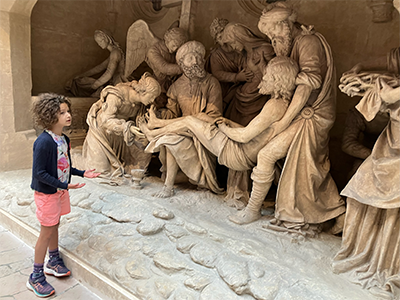
In the middle of an inauspiciously cold, wet week in Buffalo, New York, the Society of Architectural Historians (SAH) planned something a little different for its annual meeting this April. On Friday night, after a full day of sessions, meetings, and tours, a crowd of academics, architects, local activists, and students munched on tacos from the food truck parked outside and sipped beer from a makeshift bar in the darkened nave of Asbury Hall, a 19th-century church designed by John Selkirk and restored by musician and activist Ani Di Franco. The church, now a performance and arts space, thrummed with anticipation, but when the cavernous room went dark, no musicians stepped onstage. Instead, a lone spotlight illuminated a microphone in front of a huge screen. This was the beginning of PechaKucha Buffalo, an event in which each participant talks about a project or idea using 20 images which are shown for 20 seconds each.

PechaKucha, which is the sound of “chit chat” in Japanese, began in 2003 as a way for architects and designers to meet and show their work to each other and interested members of the public. PechaKucha is now a global phenomenon, according to the website (www.pechakucha.org), with PechaKucha nights taking place in over 600 cities with presenters from wide spectrum of backgrounds. Part of the success is the clearly the appeal of the highly structured format: Six minutes and 40 seconds of precisely timed slides is enough time to get into a topic but not enough to lose the audience, and it’s a perfect platform for projects that are still in the brainstorming or doodling phase.

PechaKucha Buffalo was the first time the SAH had co-sponsored an event of this kind and it offered a way to think about sharing research at an academic conference in a new way. The participants included SAH meeting attendees but also a mix of local preservationists, neighborhood activists, architects, academics, and historians. Many of the presenters wore at least two of these labels, and the projects reflected a truly inventive range of creative responses to the urban conditions of Buffalo. Other presentations highlighted projects undertaken by academics outside their customary fields. In fact, one of the most common introductions was, “My research is about X, but this doesn’t have anything to do with that.” In the course of the event, SAH attendees heard about projects on spatializing the revolution in Cairo, the scheming figure of the architect in Greek theater, heart-bombing vacant houses, and trespassing as a mode of artistic practice, among many others.

As an addition to an academic conference, the PechaKucha format creates an opportunity for historians to share their new research or interests in a way that is a refreshing departure from the 20-minute academic paper.  SAH attendees I spoke to felt it was a hugely enjoyable and productive evening and the success of the SAH co-sponsored event suggest there may be further benefits to these kinds of alternative programs at academic conferences.  PechaKucha provides platform for scholars to get their works-in-progress out in front of an audience, not unlike the Lightning Talk format favored at some conferences. It is also a way to talk about projects that are outside one’s normal research track with low expectations in terms of completeness or application to the field. PechaKucha nights are open to the public as well, and can be an alternative way to showcase what it is historians actually do or think about outside of more formal professional environments.

PechaKucha also asks presenters to think the particulars of pace, narrative, and audience in a way that could be productive no matter what the level of experience. Reading directly from a text, while allowed, is clearly less dynamic and compelling for the audience and different performance tactics than ones used in classrooms or research forums need to be employed. In addition, the use of carefully timed images as the central focus could lend historians of all stripes new insights into crafting an argument and public speaking. With exactly 20 seconds for each image, the presenter has to think through exactly how much and what kind of information to show in order to build a coherent story. Too much text or detail on a slide is distracting to the audience, while too little leaves them fidgeting in their seats as they wait for the next one. You can’t rush through or slow down the presentation so each point and image has to be carefully balanced with the one before and after.

As we begin our planning for the next annual meeting, we wanted to ask: Would you participate in a PechaKucha night if one was offered? Would you attend as an audience member? Let us know your thoughts in the comments or on Facebook, LinkedIn, or Twitter.

Bookmark and Share

Comment

April 29, 2013

Why History? A Note on the AHA Tuning Project

By Kenneth Pomeranz

If you are at a university, the April issue of Perspectives on History probably arrived together with finals or midterms. Your time is even more precious than usual, and general reading is probably not your first priority. But I would strongly encourage you to make time for the forum on the AHA’s Tuning project—even, or perhaps especially, if you are skeptical of the effort.

Like it or not, we face increasingly intense pressures to explain what benefit there is in studying history, either for the student or for society. Some of the challenging questions about our history programs may indeed be posed in such skewed ways that they appear easy to dismiss; but some people posing them have power. And other challenges are far more thoughtful. These include forms of the question “Why study history?” from within our own discipline; after all, every time a department modifies its major, it is at least implicitly asking what students doing such a major are supposed to accomplish.

They also include questions from sympathetic sources that deserve compelling answers. Anne Hyde begins her essay in this forum with a story about a student who was excited about history, and wanted help in explaining to his parents why majoring in it was not a mistake. I suspect most of us would find, as Anne did, that this is not easy to do—no matter how convinced we are that majoring in history can be a great idea.

I suspect still more of us would agree that even many of our best students have a hard time explaining their choice of majors to parents, potential employers, or friends, and that we have left whatever wisdom we have on this point largely implicit. (The ongoing decline in the legal job market—long a “practical” career option for which history was good preparation—may make these explanations still harder.) Sustained inquiry into what we want our teaching to do, and how to explain that to varied audiences, is a valuable endeavor because it will make our collective wisdom more explicit and widely known. So we should view this task as an intellectual opportunity as well as an urgent practical necessity. 

The Tuning project is not, of course, the only form that our responses will take, but it is a very important one—both because it has the AHA’s name behind it and because it represents a collective endeavor, involving historians from a wide variety of institutions. While some parts of the answer will vary with the type of institution we work at and the kind of history we do, others will not; we will all benefit from thinking about the work of our colleagues on this project rather than inventing our answers from scratch when, as is bound to happen, we need to do so.   

Nobody needs to adopt the answers that any particular “tuner,” or even the whole group, comes up with, any more than we need to adopt whatever current consensus may exist on a given issue in our research fields. But just as we generate good research questions by placing our own enthusiasm and curiosity in dialogue with what colleagues have already written, our individual answers to why history is valuable will be much better if we frame them while listening in on Tuning’s intensive structured dialogue on this question. We must have at least partial answers capable of surviving strong challenges: from historian colleagues, from other disciplines, and from both friendly and hostile members of the general public.

The April issue of Perspectives on History is now open to all readers, members and nonmembers alike, online. The April forum on the AHA Tuning project can be found at the links below.

The AHA’s Tuning Project at Twelve Months
By James Grossman

Tuning and Recharging:Tales from Twelve Months In
By Elizabeth A. Lehfeldt

Tuning, Teaching, and Taking Care of Students
By David Trowbridge

Advising Mom and Dad: History Majors and Family Worries
By Anne Hyde

Tuning the Core: History, Assessment, and the St. John’s University Core Curriculum
By Elaine Carey

An Unexpected Bridge: The AHA Tuning Project and Writing Across the Curriculum
By Daniel S. Murphree

Does History Matter? A Cautionary Tale for the Tuning Project
By Johann N. Neem

Tuning Resources and Ongoing Discussions

Bookmark and Share

Comment

April 28, 2013

AHA Supports Visas for Cuban Scholars to Attend LASA Conference

By Kenneth Pomeranz

The following letter was submitted to the United States Secretary of State, John Kerry, in support to facilitate visas for Cuban scholars to attend the Latin American Studies Association (LASA) conference.

Dear Mr. Secretary:

I write on behalf of the American Historical Association (AHA) to request your support to facilitate visas for Cuban scholars who have been invited to participate in the XXXI International Congress of the Latin American Studies Association to be held May 29 to June 1, 2013 in Washington, D.C.

The Latin American Studies Association (LASA) is the largest professional association in the world for individuals and institutions engaged in the study of Latin America. With over 8,000 members, 45 percent of whom reside outside the United States, LASA is the one association that brings together experts on Latin America from all disciplines and diverse occupational endeavors, across the globe. LASA’s mission is to foster intellectual discussion, research, and teaching on Latin America, the Caribbean, and its people throughout the Americas, promote the interests of its diverse membership, and encourage civic engagement through network building and public debate. The annual meeting of the Latin American Studies Association offers a unique opportunity for academics from around the world to gain insight into the field of Latin American Studies, as well as the opportunity to network and disseminate the latest research being done in and about the region.

While many Cuban scholars are LASA members, they are not always able to participate in the annual meetings. In 2004 the George W. Bush administration denied visas to all 61 Cuban scholars who had been invited to attend that year’s meeting in Las Vegas, prompting the organization to move subsequent meetings outside the United States in protest. In 2012, LASA returned to the United States as it had come to believe that the Obama administration was more permissive of academic exchanges between the United States and Cuba. However, ten Cuban scholars were denied visas even though many of them had previously visited the United States with fellowships at some of the nation’s most prestigious universities and had met with high-level officials at the State Department.

It has come to my attention that five Cuban scholars have already been denied visas to attend this year’s meeting in May. These visa denials undermine the administration’s policy of promoting academic exchange with Cuba, which has been one of the most positive and successful changes in US policy toward Cuba in recent years. These exchanges have helped promote the free flow of ideas, information, and dialogue and have helped feed the desire for greater openness in Cuba. The visa denials are damaging to US-Cuban relations, they hurt Cubans who are seeking increased engagement with the United States and they are harmful to US scholars who have the right to learn from their Cuban colleagues.

I hope that as Secretary of State you will support LASA’s endeavor to include our Cuban colleagues in democratic and scholarly debates.

Sincerely,

Kenneth L. Pomeranz
President, 2013

Bookmark and Share

Comment [1]

April 28, 2013

Hiring: AHA Director of Scholarly Communication and Digital Initiatives

The American Historical Association is seeking a Director of Scholarly Communication and Digital Initiatives. The Director of Scholarly Communication and Digital Initiatives will oversee the AHA’s communications with members and other constituencies. This includes print and digital publishing, web design, information management, and membership – all part of a strategy to enable the American Historical Association’s programs and activities to take maximum advantage of the new digital environments in which historians work. The AHA seeks a scholar with the skills and vision to help lead the development of the AHA as the nation’s most important hub for the work of professional historians in the 21st century.

Key responsibilities include:

For additional details on the position, and how to submit an application, see the complete description of the position.

Bookmark and Share

Comment

April 25, 2013

Grant of the Week: The William and Madeline Welder Smith Research Travel Award

Deadline: May 31, 2013

The Dolph Briscoe Center for American History at the University of Texas at Austin announces the 2013–2014 William and Madeline Welder Smith Research Travel Award. Five fellowships of up to $1,000.00 each will be given, and the aid may be used any time from September 1, 2013 to August 31, 2014.

Through the Smith Travel Award, the Briscoe Center for American History will assist masters, doctoral, and post-doctoral students with costs associated with travel to Austin, Texas. The award is intended for students who need to conduct in-depth research in the holdings of the Briscoe Center and who reside outside of the Austin metropolitan area.

For more information about the travel grant and application requirements, please visit their website.

For information on other grants and prizes in history, see the “Awards and Fellowships” section of the AHA Calendar.

Bookmark and Share

Comment

April 24, 2013

What We’re Reading: April 25, 2013

By AHA Staff

Today’s What We’re Reading features an oral history project on the Boston Marathon bombing, an annual list of the top 200 jobs in 2013, 17 reasons why living in the past is overrated, and more!

History in Current Affairs
“The Ghost of Gun Control”
In this animated Op-Doc, a ghost mourns the failed history of gun control in the United States.

What Essays Affected International Relations?
A top five list from Daniel W. Drezner at Foreign Policy.

Abraham Lincoln backed slavery measures, U.S. Rep. Paul Ryan says
Paul Ryan uses his ideas about Lincoln to create a strategy for the pro-life movement. Politifact checks his account with eight well-known historians.

George W. Bush Is Victim of a Rush to Judgment
Stephen F. Knott , author of a new book on Bush, claims that “Many academics branded Bush a failure long before his presidency ended.” All of his examples of “academics” are historians.

Other History in the News
A Moment from the Boston Marathon
The New York Times has already begun collecting oral histories from the Boston Marathon bombing.

Jobs Rated 2013: Ranking 200 Jobs from Best to Worst
The Careercast.com website just published its annual list of the top 200 jobs of 2013, and a few of our own ranked fairly high on the list. University Professor (tenure track) sailed in at 14, while Historian ranked 25, Museum Curator was 57, and our friends in Social Media and Community Management made a respectable 39. Historians should be feeling fairly pleased, since this vocation was found to be more desirable than other, often STEM-related jobs such as Astronomer (36), Physician (45), and Nuclear Decontamination Technician (65). In the dead-end, last place on the list? Reporter.

Why We Must Remember Rohwer
Actor George Takei recounts his childhood experience at the Rohwer internment camp in Arkansas, shortly after the bombing at Pearl Harbor.

Against all authority
The Economist discusses a new documentary about the history of punk rock in South Africa, Mozambique, and Zimbabwe in the 1980s.

Free to All
Historian and former AHA president Robert Darnton discusses the “revolutionary message” behind the opening of the Digital Public Library of America, and its place in America’s cultural heritage.

Odds and Ends
How to Assess the Real Payoff of a College Degree
The Chronicle hosts a discussion on whether “return on investment” is the best way to think about why one should go to college.

The Writer’s Technique in Thirteen Theses: Walter Benjamin’s Timeless Advice on Writing
A list of 13 writing tips, supplied by Walter Benjamin.

What’s the Status of an Academic Blog Post?
Last week we linked to a blog post that pondered whether a peer-reviewed article should dismantle an argument offered in an academic blog.   The conversation continues at the US Intellectual History Blog.

A Nobel Prize for Teaching?
The controversial Minerva Project has introduced the Minerva Prize for Advancements in Higher Education, an annual $500,000 prize for teaching to be awarded to a faculty member “whose innovations have led to extraordinary student learning.”

Fun and Off-beat
17 Reasons Why Living in 2013 Is Way Better Than Living in 1668
Buzzfeed offers a satirical reflection on how modern technology has revolutionized daily life for the better. 

Wonkblog book club: Ira Katznelson’s “Fear Itself”
Ezra Klein’s Wonkblog is starting a book club, and the first selection is Ira Katznelson’s, Fear Itself: The New Deal and the Origins of Our Time. The first 130 pages are “due” on May 10.

Office Hours Are Over
Another funny Tumblr spoofing academic life. Fair warning, there is colorful language.

Bookmark and Share

Comment

Older Posts